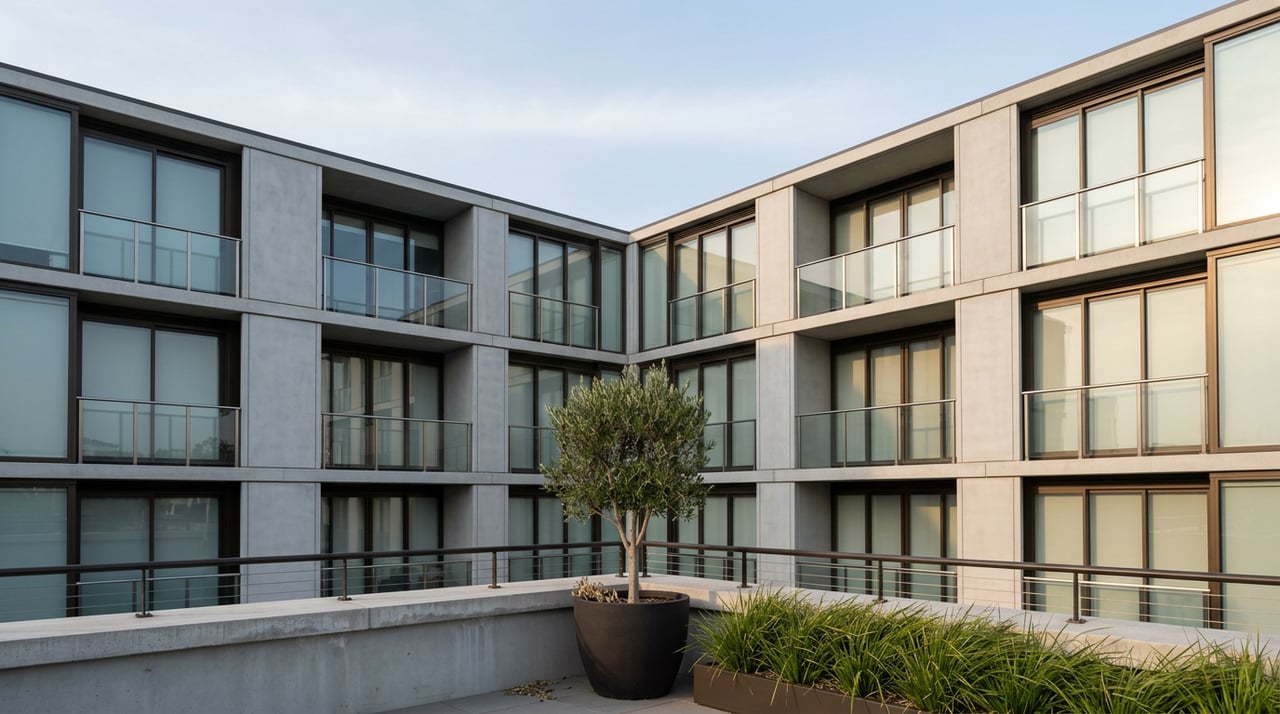
In South Beach, the Balcony Deadline Passed a Year Ago. The Paperwork Just Caught Up.
September 17, 2026
September 17, 2026
If you own a condo in one of South Beach's waterfront towers and you've been telling yourself the balcony inspection law is a 2025 problem that's already behind you, the timing is more complicated than that. The inspection deadline did pass. What changed is what happens next, and it changed on January 1 of this year, quietly enough that most sellers won't hear about it until an escrow officer asks for a document their HOA may not have handy.
Here is the shape of it. Two California laws require periodic safety inspections of exterior elevated elements, meaning balconies, decks, stairways, and walkways more than six feet off the ground. SB 721 covers rental apartment buildings. SB 326 covers condominium associations. Both were passed in 2019 as a response to a fatal Berkeley balcony collapse, and both set a first-inspection deadline. Then in 2024, lawmakers extended the apartment deadline under SB 721 by a full year, citing a shortage of qualified inspectors. The condo deadline under SB 326 got no such extension. It stayed at January 1, 2025. That date has passed, and any South Beach HOA that hasn't completed its first inspection cycle is already out of compliance with no grace period left to invoke.
That divergence alone catches boards off guard, since the two laws are close cousins and people assume relief for one means relief for the other. But the part that actually matters for anyone listing a unit this year is a separate bill entirely.
SB 410, signed into law as Chapter 516 of the 2025 statutes, took effect January 1, 2026. It amends the Davis-Stirling Act's disclosure requirements at Civil Code section 4525 to add one specific document to the standard condo resale packet: the association's most recent SB 326 exterior elevated elements inspection report. The same bill amends sections 5200 and 5210 to classify that report as an official association record, meaning owners and buyers can request it directly, and requires it be retained for two full inspection cycles.
Before this year, the SB 326 report existed mostly as an internal board document. A buyer's agent who wanted it had to know to ask. Now it's baked into the same disclosure packet as the HOA's financial statements, meeting minutes, and assessment history. A missing or overdue report doesn't just look sloppy. It becomes the disclosure itself, and a buyer's agent reviewing that packet has every reason to flag it.
Here's the part that surprises most sellers: SB 326 itself carries no direct statutory fine for missing the inspection deadline. There's no state agency auditing HOAs for compliance the way a building department enforces a local code. The pressure comes from somewhere else entirely.
| Requirement | Applies to | First deadline | Extension | Inspector |
|---|---|---|---|---|
| SB 721 | Apartment buildings, 3+ units | Jan 1, 2025 | Extended to Jan 1, 2026 | Licensed contractor or engineer |
| SB 326 | Condo associations, 3+ units | Jan 1, 2025 | None | Licensed structural engineer or architect only |
That last column matters. SB 326 is stricter than its apartment counterpart in a way that trips up boards who hired the wrong professional. General contractors, even experienced ones, cannot perform an SB 326 inspection. If a board brought in a contractor instead of a licensed engineer or architect, the inspection may need to be redone from scratch, on the board's dime, before a compliant report exists at all.
Here's where South Beach owners face a wrinkle that doesn't show up in generic California condo guides. San Francisco has its own local ordinance, Section 604 of the Housing Code, that has required exterior appendage inspections since 2002, well before the state got involved. It runs on its own six-year cycle, requires a compliance affidavit filed with the city's Department of Building Inspection, and covers apartment buildings, condos, and hotels alike.
Section 604 and SB 326 examine similar physical elements, but they are not the same compliance. A South Beach tower can be current with its state SB 326 inspection and still be behind on its city Section 604 affidavit, or the reverse. Buyers, lenders, and title companies are increasingly asking for both, and a seller who assumes one satisfies the other is the person who finds out mid-escrow that it doesn't.
South Beach's condo stock skews toward buildings that are now old enough to have gone through at least one full inspection window. Baycrest Towers at 201 Harrison Street, a 288-unit high-rise completed in 1991, has been standing for well over three decades. The Beacon, a 595-unit tower designed by Johnson Fain and completed in 2004, and the Watermark, a 22-story building on the waterfront completed in 2006, are both old enough that their exterior elements have real mileage on them. None of this means these specific buildings have a problem. It means they're squarely inside the category of construction the law was written for, and any prospective seller in one of them should assume the question will come up.
For a mid-size association, a compliant SB 326 inspection typically runs $15,000 to $50,000 or more, depending on the number and complexity of elevated elements and the sampling standard the engineer applies. That cost gets built into either the HOA's reserve budget or, if reserves are thin, a special assessment split among owners. Monthly HOA dues across South Beach's full-service towers commonly land between $400 and $1,200, with buildings offering pools, fitness centers, and staffed lobbies often running closer to the top of that range. A seller whose building is mid-inspection or facing a fresh assessment needs to know that number before pricing conversations start, not after an offer comes in.
South Beach condos posted a median sale price of roughly $1.2 million in May 2026, with units averaging about 31 days on market. That pace feels reassuring. It shouldn't be, for this specific issue. A market moving in three to four weeks leaves almost no slack for a seller who discovers, after going into contract, that the HOA's inspection was performed by the wrong type of professional and needs to be redone, or that the report exists but hasn't been formally incorporated into the reserve study the way SB 326 requires. Lenders have started treating incomplete or unfavorable inspection files as a factor in whether a building qualifies for conventional financing at all, which can shrink your buyer pool right at the moment you need it widest.
The practical fix is simple and almost entirely a matter of timing. Before you list:
None of this needs to slow down a sale. It needs to happen weeks before the sale, not the week of it.
Does this apply if my building's balconies are concrete, not wood? SB 326 covers exterior elevated elements supported substantially by wood or wood-based products. Concrete or steel balconies not relying on wood framing generally fall outside the law's scope, though it's worth confirming with the HOA rather than assuming.
Can I still sell if my HOA hasn't completed its inspection yet? Yes, but the absence of a report becomes something a buyer's agent will notice and ask about, and it may affect how a lender views the building's financing eligibility. Getting ahead of the question with a clear timeline from the board is far better than leaving it open.
Does this affect financing before I even find a buyer? It can. Buildings with incomplete or unfavorable inspection files have faced tighter underwriting from conventional lenders, which shrinks the pool of financeable buyers even before your unit hits the market.
South Beach's towers are still trading briskly, and none of this changes that. What it changes is when the real work of preparing a listing needs to start. If you're weighing a sale in one of these buildings, or trying to understand what a specific HOA's inspection and reserve position means for your timeline, Highrises2Homes can walk through the building's actual paperwork with you before it becomes a surprise in escrow. Schedule a consultation and let's look at what your building's file actually says.
Stay up to date on the latest real estate trends.
Home Maintenance

Home Selling
Home Improvement
Homeownership
With deep expertise in both high-rise living and single-family homes throughout San Francisco and the Peninsula, our team brings a sharp eye for detail and a thoughtful, data-driven approach—helping you navigate the market with clarity, uncover opportunities others miss, and secure the right property with confidence.
HIGHRISES2HOMES
[email protected]
(415) 205-3899
LESLIE BAUER | CA DRE# 01800943
SIDE, INC. | CA DRE# 02014153
629 DIVISADERO ST SAN FRANCISCO, CA 94117