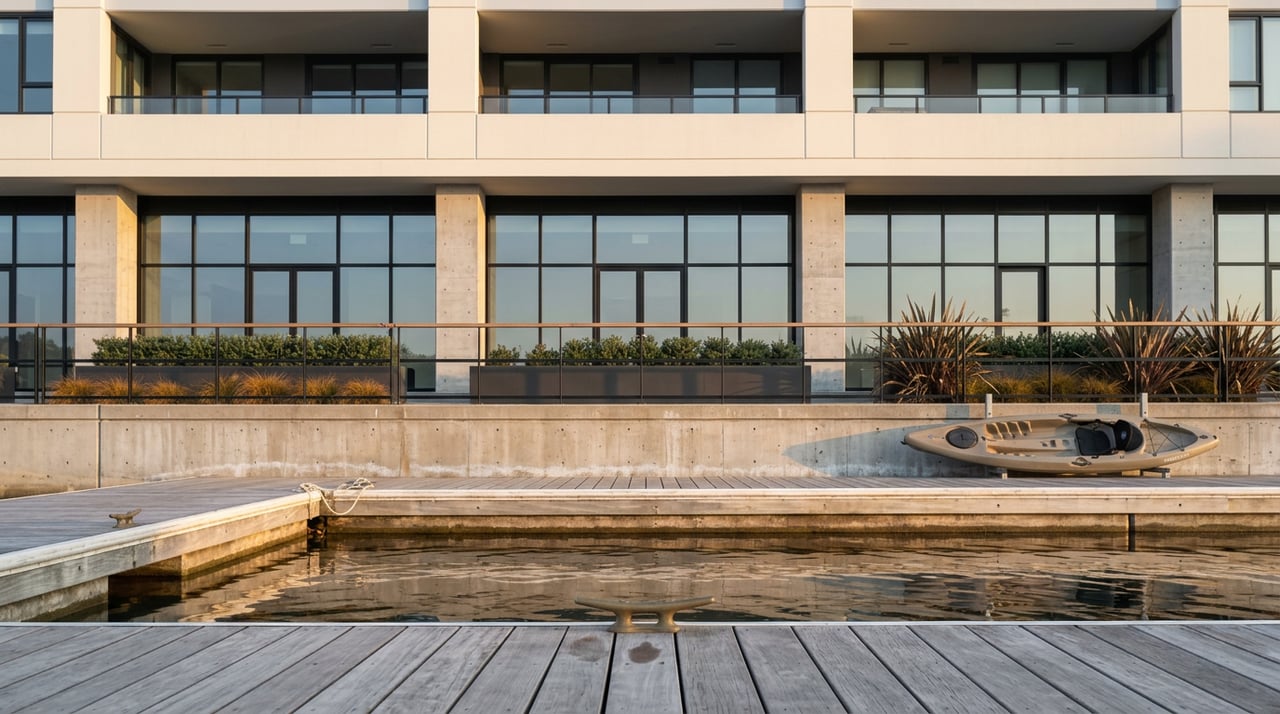
Why South Beach Watches Baseball From the Water, Not the Stands
August 27, 2026
August 27, 2026
Ask someone who has never lived here how to watch a Giants game in South Beach, and they will tell you to buy a ticket. Ask someone who has lived here through a full season, and they will tell you the ticket is optional. On any night the Giants play at home, a flotilla of kayaks gathers in the patch of bay directly behind Oracle Park's right field wall, and the people paddling out there are not locked out of the game. They are choosing a different seat.
That patch of water has a name, McCovey Cove, and this August it is doing more work than usual. The Giants have 16 home games on the schedule this month, which means half the nights in August put a live crowd, a scoreboard, and nine innings of baseball within walking distance of anyone in the neighborhood, whether or not they own a ticket. The cove has been part of South Beach since the ballpark opened in 2000. What has changed recently is what happens on land around it, and that combination is worth understanding if you live here.
Start with the number that surprises people who assume the cove is about home run chasing. As of mid-August 2026, only 110 splash hits, home runs that clear the wall and land in the water on the fly, have happened in more than two decades of Giants baseball at this ballpark. Thirty-five of those belong to one player, Barry Bonds, whose run at the single-season home run record in the early 2000s is the reason the cove became a destination in the first place. Only one has ever come off a right-handed bat, when Heliot Ramos connected in September 2024, a full 24 years into the ballpark's history.
Do the arithmetic on that. Across roughly 26 seasons of home games, the water has produced a splash hit at a rate you could measure in single digits per year, and most of those belong to a stretch two decades gone. If you paddle out expecting to see a ball land near your kayak, you will almost certainly go home disappointed. Bill Schlough, the Giants' chief information officer, has called catching a game from the cove a bucket list experience regardless, and the guides who run kayak trips out there back that up: the appeal was never really the home run.
"The home runs don't land randomly. The No. 1 skill is being where the ball will land."
That line comes from one of the paddlers KQED interviewed for a piece on cove kayaking, and it captures something true about the whole ritual. People who chase splash hits have made a study of pitcher and batter tendencies, because left-handed power hitters facing certain pitchers are the only realistic shot at a ball clearing the wall. Everyone else out there has accepted that the odds are poor and shown up anyway, for the crowd noise carrying over the wall, the big screen mounted to broadcast the game to the water, and the sight of Oracle Park from an angle almost nobody else in professional sports gets to see for free.
Two outfitters make this a standing option rather than a novelty. City Kayak operates out of Pier 40 at South Beach Harbor, a ten minute paddle from the cove, and runs trips on every home game. Dogpatch Paddle & Kayak launches from the Mission Creek Boathouse at 401 Berry Street, a similarly short paddle through Mission Creek, and rents single kayaks around $45 an hour and tandems around $60, with most game-day bookings running two to three hours. Neither requires previous kayaking experience. Both recommend arriving early, since parking near either launch point gets tight on game days and public transit, specifically Muni's 2nd and King stop right outside the ballpark or the 4th and King Caltrain station a block and a half away, tends to be the less stressful way in.
The cove is not empty on the nights without baseball either. Harbor seals haul out on the buoys near the stadium, great blue herons work the shoreline, and pelicans move through on their own schedule, which means the water in front of Oracle Park functions as part of the neighborhood's everyday waterfront even when nobody is playing. But 16 games packed into one month changes the texture of an average week here. In a typical month with fewer home dates, catching the cove scene means checking a schedule. In August, the odds tilt the other way. Walk the Embarcadero on most evenings this month and you are more likely than not to catch the tail end of an inning drifting over the water.
One rule locals do not skip, no matter how warm the afternoon looked when they left home: bring a layer. The wind off the bay and the fog that rolls in from the Sunset over Twin Peaks do not check the forecast before showing up, and anyone who has spent a night bobbing in the cove in shorts because the day started at 78 degrees can tell you it dropped without warning by the seventh inning.
For most of Oracle Park's history, a night at the cove or a night at the ballpark meant the same food options nearby: garlic fries, a hot dog from one of the concession stands, maybe a burger at one of the sports bars clustered near Third and King. That changed this spring. Casa Sofia Kitchen & Bar opened for dinner on May 18, 2026, one block from the ballpark, and it is not another sports bar. Chef Carlos Altamirano built the menu around Peruvian cooking, ceviches and tiraditos, anticuchos grilled over coals, lomo saltado rooted in the chifa tradition that blends Peruvian and Chinese cooking. The bar program centers on pisco, with a Pisco Sour, a Chilcano, and a Chicha Sour on the list alongside grower Champagne and San Francisco craft beer on draft. The Sofia Room seats up to 40 and the Chef's Table seats 12, both built with game day gatherings in mind.
What that means practically is that the neighborhood finally has a real answer for people who want to be part of a South Beach game night without walking through the gates. Dinner at Casa Sofia, then a stroll to Rincon Park or straight down to the harbor to watch the last few innings from land or from a kayak, is now a complete evening that did not exist as an option a year ago. It is a small addition on a map, one restaurant on one block, but it closes a gap that had been sitting there since the ballpark opened: somewhere sit-down and specific to eat before or after, within a block of the action, that is not built around a television screen.
Sixteen games out of a 31-day August still leaves 15 nights where the ballpark goes quiet, and South Beach does not stop being interesting on those nights. Rincon Park sits along the waterfront south of the Ferry Building, its grassy promenade a regular stop for joggers and anyone chasing bay views, anchored by Cupid's Span, the oversized bow-and-arrow sculpture that Gap founders Donald and Doris Fisher gave the city. South Beach Harbor's marina, with its more than 700 berths, keeps its own rhythm regardless of what the Giants are doing a few blocks north, and the same water that fills with kayaks on game nights is simply quieter, not empty, on the nights in between.
That is the fuller picture of an August here. It is not a month that revolves entirely around baseball. It is a month where baseball shows up often enough, 16 times in 31 days, that it becomes part of the ambient rhythm of the neighborhood rather than an occasional event, and where the blocks immediately around the ballpark now offer more reasons to linger than they did even a season ago. Whether that means a kayak reservation, a table at Casa Sofia, or just a walk past Cupid's Span on a night with no game at all, the water and the streets around it are doing more this year than most visitors, or most first-year residents, would expect.
If you already call South Beach home, none of this changes what your address is worth. But if a friend or a colleague is weighing whether this stretch of the San Francisco waterfront fits the way they actually want to live, real estate agent Leslie Bauer has spent years matching people to buildings and blocks like this one, where the everyday texture of a neighborhood matters as much as the square footage. Reach out to schedule a consultation.
Stay up to date on the latest real estate trends.
Home Maintenance

Home Selling
Home Improvement
Homeownership
With deep expertise in both high-rise living and single-family homes throughout San Francisco and the Peninsula, our team brings a sharp eye for detail and a thoughtful, data-driven approach—helping you navigate the market with clarity, uncover opportunities others miss, and secure the right property with confidence.
HIGHRISES2HOMES
[email protected]
(415) 205-3899
LESLIE BAUER | CA DRE# 01800943
SIDE, INC. | CA DRE# 02014153
629 DIVISADERO ST SAN FRANCISCO, CA 94117